Internal Command: Timeline Drift Index™ Protocol
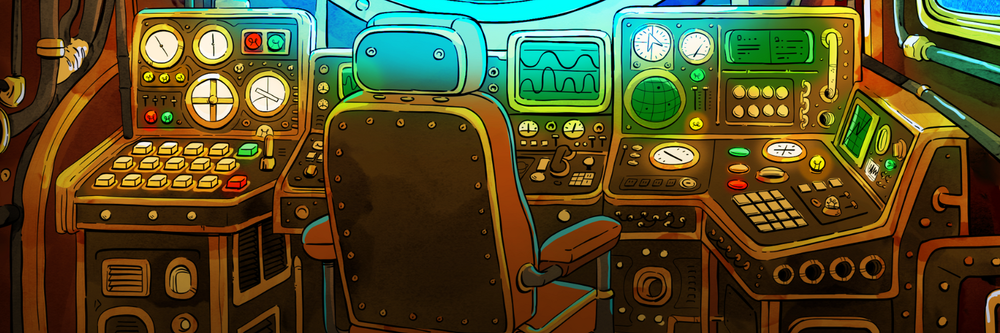
The gauges are twitching.
Not wildly. That would be easier.
Just enough to know something’s wrong.
Depth holding. Hull intact. Power nominal.
But the sound is different now—lower, thicker.
The kind of sound that tells you the ocean is no longer background.
It’s engaged.
Someone wipes sweat off their forearm with the back of a glove.
Another hand hovers over a lever it shouldn’t need yet.
You feel it in the body first.
The jaw locks.
The breath goes shallow.
The shoulders pull in like the walls are moving.
No one says panic.
No one has to.
This is the moment we wrote Internal Command for.
Not the kraken yet. Not the spectacle.
The moment before—when the system is still running, but the margin is gone.
We wrote this because most people think failure looks like chaos.
It doesn’t.
Failure looks like functioning under the wrong assumptions.
It looks like:
- Keeping the ship moving while the signal degrades
- Compensating for drift instead of correcting it
- Staying “reliable” while losing internal authority
- Running on legacy commands long after the mission changed
Inside the command center, no one gives a speech.
No one says “you’ve got this.”
They run checks.
They restore hierarchy.
They cut noise.
They decide who speaks and who acts.
They bring the system back into coherence before the hull screams.
That’s what this book is.
The kraken isn’t a monster.
It’s pressure—old pressure, deep pressure, the kind that doesn’t care how competent you are.
The blue portal isn’t escape.
It’s not fantasy.
It’s the moment someone realizes:
We don’t need more force. We need command.
Internal Command was written for people who:
- Are still operating
- Are still carrying others
- Are still showing up
- But can feel the signal slipping through their fingers
It’s for the instant when your body knows something your calendar doesn’t.
When your nervous system starts compensating.
When the alarms haven’t gone off—but they’re warming up.
This book doesn’t tell you to surface.
It doesn’t tell you to fight the ocean.
It doesn’t tell you to “heal harder.”
Internal Command hands you the console.
It shows you how to:
- Read the drift
- Stabilize the system
- Restore decision authority
- And make the jump cleanly, without tearing yourself apart
Because at depth, under load, with pressure closing in—
motivation is useless.
Only command matters.
That’s why we wrote this.